If you have mature trees around your home, you probably love the shade, beauty, and curb appeal they provide. But beneath the surface, those same trees may be causing a plumbing problem you can’t see.
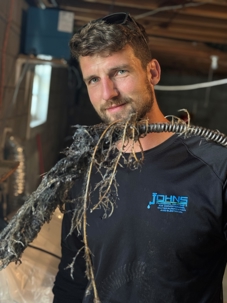
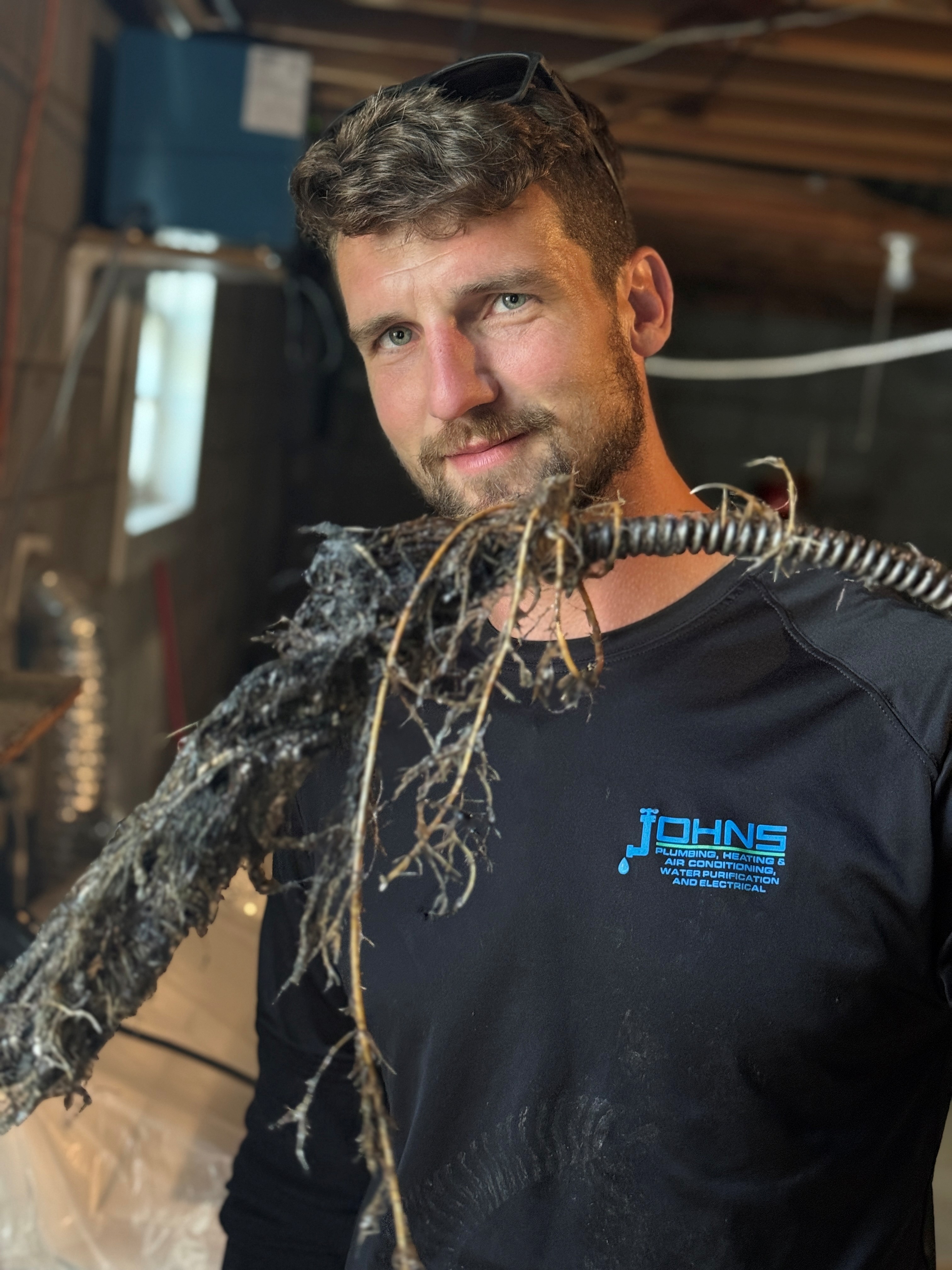
Tree roots in sewer lines are a common cause of recurring clogs, slow drains, and sewer backups.
Roots naturally grow toward sources of moisture and nutrients. Unfortunately, a damaged or aging sewer pipe can provide both.
A small crack, separated joint, offset, or deteriorating section of pipe can give roots an opening into the line. Once inside, those roots can continue growing and create a net that catches toilet paper, grease, hair, and other debris moving through the pipe.
What starts as a tiny root intrusion can eventually become a major blockage—and potentially a messy sewer backup.
At Johns Plumbing, Heating and Air Conditioning, Water Purification, and Electrical, we see firsthand how much trouble sewer line roots can cause. The good news is that root intrusion can often be identified, treated, and managed before it turns into a plumbing emergency.
How Do Tree Roots Get Into Sewer Pipes?
You might wonder how something as small as a tree root can get inside a sewer pipe in the first place.
The answer is usually a weakness in the pipe.
Sewer lines are designed to be watertight, but older pipes can develop problems over time. Cracks, separated joints, shifting soil, deteriorating materials, and other defects can create tiny openings.
Roots are persistent. When they encounter moisture escaping from a damaged sewer line, they can grow toward it and eventually find their way through the opening.
And they don’t need a large hole to get started.
A typical root intrusion can look something like this:
Small crack or separated joint → root enters → roots grow inside the pipe → debris gets caught → flow becomes restricted → sewer backup
That’s why simply removing the roots doesn’t always solve the underlying problem.
What Problems Can Sewer Line Roots Cause?
Root intrusion can cause anything from an annoying slow drain to a completely blocked sewer line.
Common warning signs include:
- Slow drains throughout the house
- Toilets that gurgle or bubble
- Recurring toilet clogs
- Multiple drains backing up at the same time
- Water backing up into a bathtub or shower
- Foul sewer odors
- Sewage backing up through a floor drain
- Repeated sewer line blockages
- A sewer line that keeps clogging shortly after being cleared
One especially important warning sign is multiple fixtures having problems at the same time.
If your kitchen sink is draining slowly, you could simply have a localized drain problem.
But if your toilet, shower, sinks, or other fixtures are all draining slowly or backing up, the problem may be farther down the line—potentially in your main sewer line.
Why Do Roots Keep Coming Back After a Sewer Line Is Cleared?
This is one of the most frustrating things about root intrusion.
A plumber clears the roots, the sewer starts flowing again, and everything seems fine.
Then, weeks or months later, the problem comes back.
Why?
Because clearing the roots doesn’t necessarily repair the pipe that allowed them inside.
Think about it like pulling weeds out of a crack in your driveway.
You removed the weeds, but the crack is still there.
Eventually, the weeds can come back.
The same basic principle applies to tree roots in a sewer line. If a pipe has a crack, separated joint, or another defect, that opening remains after the roots are removed. New root growth may eventually find its way back inside.
That’s why recurring sewer backups shouldn’t simply be treated as another clog.
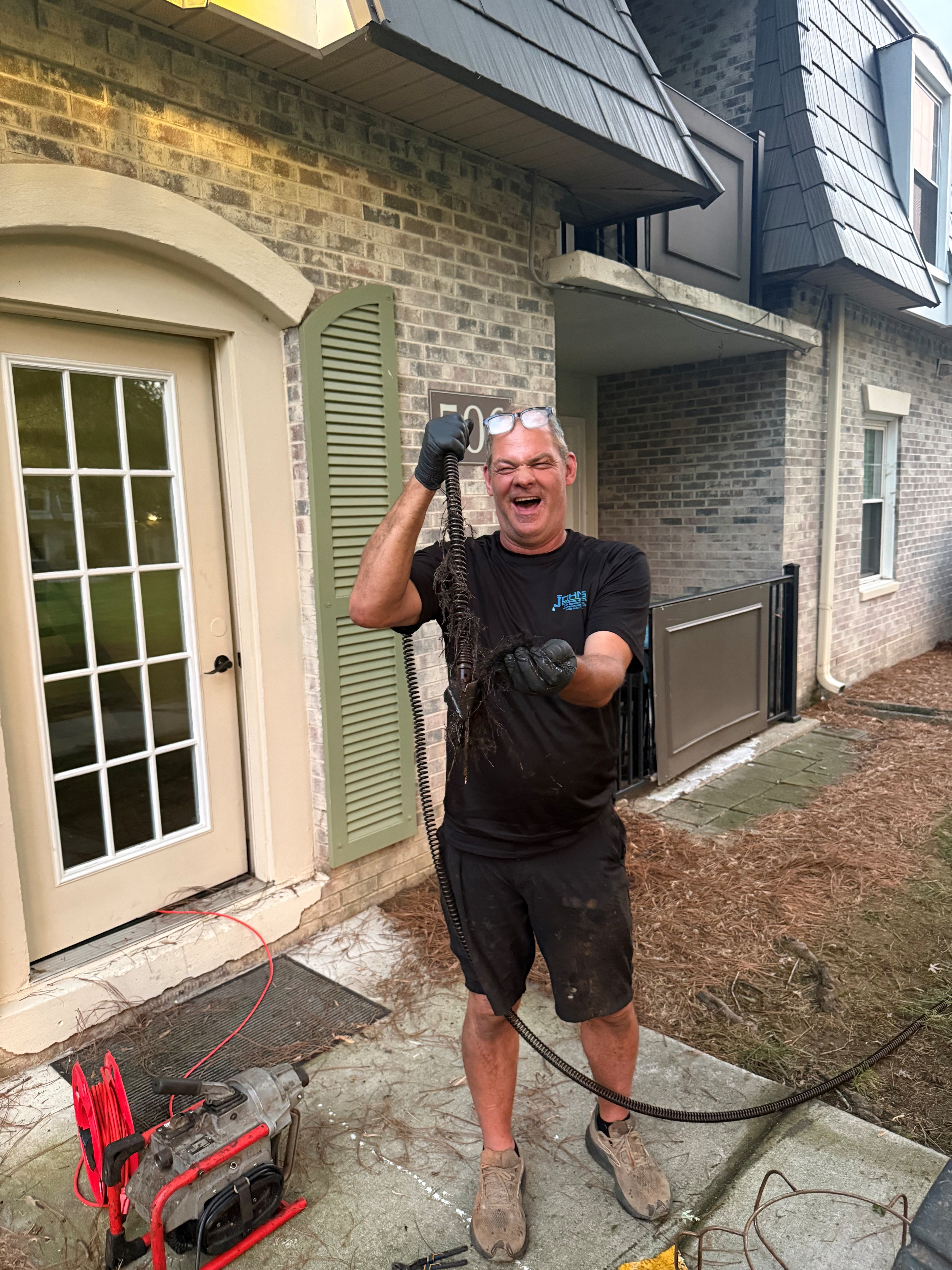
If the same sewer line keeps having problems, it’s worth finding out why.
Can Root Treatment Help With Sewer Line Roots?
Root-control treatments can be useful for managing root growth inside sewer lines, particularly when a line has a history of root intrusion but is otherwise in reasonably good condition.
Depending on the situation, root treatment may help:
- Control root growth inside the sewer line
- Reduce the likelihood of recurring root-related blockages
- Extend the time between sewer cleanings
- Provide an additional maintenance option for sewer lines with known root intrusion
However, root treatment is not a structural repair.
Root treatment does not:
- Repair a cracked pipe
- Reconnect a separated pipe joint
- Correct an offset pipe
- Fix a collapsed sewer line
- Restore a severely deteriorated pipe
- Replace a failed sewer line
In other words, root treatment can help manage the symptom, but it cannot fix a sewer line that is structurally failing.
That’s why the right solution starts with understanding what’s actually happening inside the pipe.
Sewer Camera Inspection: Find the Problem Instead of Guessing
If you’re dealing with recurring sewer backups or suspected root intrusion, a sewer camera inspection can be one of the most valuable diagnostic tools available.
A small inspection camera can be run through the sewer line, allowing a plumbing professional to see what’s happening inside the pipe.
A camera inspection can help identify:
- Tree root intrusion
- Cracked pipes
- Separated joints
- Offset pipes
- Heavy buildup
- Collapsed sections
- Bellies or low spots
- Other structural problems
Instead of repeatedly clearing the same blockage and hoping it stays away, a camera inspection can help answer the bigger question:
Why does this keep happening?
That information can help determine whether the appropriate solution is sewer cleaning, root treatment, preventative maintenance, repair, or replacement.
How Can Homeowners Prevent Sewer Line Root Problems?
You can’t completely control where tree roots grow, but you can take steps to reduce the risk of future sewer problems.
1. Know Where Your Sewer Line Is
If you don’t know where your sewer line runs through your property, it’s worth finding out.
Knowing the location of your underground sewer line can help you make smarter decisions about landscaping, tree placement, and future construction projects.
2. Think Carefully Before Planting Large Trees
Trees are a long-term investment.
A tree that looks small when you plant it can eventually develop a substantial root system.
Before planting a large tree, consider its mature size and root characteristics, as well as the location of your underground utilities.
Avoid placing large trees directly over or immediately adjacent to sewer lines whenever possible.
3. Don’t Ignore Recurring Sewer Backups
If you’ve already had your sewer line cleared several times, don’t assume it’s simply “another clog.”
Recurring blockages are a reason to investigate the condition of the pipe.
Especially when mature trees are nearby, repeated problems may indicate root intrusion, a damaged pipe, or another underlying sewer line issue.
4. Consider Preventative Sewer Maintenance
If your home has a history of root intrusion, preventative maintenance may make more sense than waiting for the next emergency.
Depending on the condition and history of your sewer line, maintenance may include:
- Periodic sewer cleaning
- Root-control treatment
- Sewer camera inspections
- Monitoring known problem areas
A plumbing professional can help determine an appropriate maintenance schedule based on your particular sewer line.
5. Consider a Sewer Inspection When Buying an Older Home
Buying a house with mature trees?
A sewer inspection may be worth adding to your list.
You can have a thorough home inspection and still have an underground sewer problem that isn’t obvious from inside the house.
A sewer camera inspection can provide valuable information about the condition of the sewer line before you buy—potentially giving you the opportunity to address a problem before it becomes an expensive surprise.
When Is Sewer Cleaning Enough—and When Do You Need a Repair?
Not every sewer root problem means you need to replace the entire sewer line.
The appropriate solution depends on the condition of the pipe and the severity of the problem.
Sewer cleaning may be appropriate when:
The pipe is structurally sound but roots, grease, or other buildup are restricting the flow.
Root treatment may be appropriate when:
The sewer line has manageable root intrusion and the pipe is otherwise in good condition.
Repair may be appropriate when:
A camera inspection reveals a localized crack, separated joint, offset, or another repairable defect.
Replacement may be necessary when:
The sewer line is severely deteriorated, collapsed, repeatedly failing, or otherwise beyond practical repair.
The goal isn’t to recommend the biggest plumbing job.
The goal is to find the actual problem and recommend the solution that makes the most sense for your home.
Don’t Wait Until Roots Turn Into a Sewer Backup
Tree roots don’t usually create a sewer emergency overnight.
Often, the problem starts with a small defect in the pipe. A root finds the opening, grows inside the line, catches debris, and gradually restricts the flow.
By the time wastewater starts backing up into your home, the problem may have been developing underground for quite a while.
If your sewer line has started backing up repeatedly, your drains are slowing down, or you’ve already had roots cleared from the line, it’s worth finding out what’s happening underground.
A sewer camera inspection can help identify the cause and give you a clearer picture of your options.
Get to the Root of the Problem With John’s Plumbing
Have a recurring sewer problem?
Let us help you find out what’s really happening inside your sewer line.
Whether you need a sewer inspection, cleaning, root-control treatment, preventative maintenance, repair, or help determining your next step, our team can help identify the problem and explain your options.
Don’t wait for a recurring sewer issue to become a plumbing emergency.
Contact Johns Plumbing today to schedule a professional sewer inspection or sewer line service.
Roots are looking for water. Your sewer line happens to provide it.
At Johns Plumbing, Heating and Air, Water Purification, and Electrical, we’re here to help you get to the root of the problem.